
How To Build Your First Affiliate Website And Start Earning Online
Building your first affiliate website involves choosing a niche, joining affiliate programs, setting up WordPress hosting, publishing helpful SEO content, and adding affiliate links naturally. Beginners should focus on solving problems, creating trustworthy content, and growing traffic consistently through Google SEO or social media.
If you’ve been curious about building your first affiliate website but didn’t know where to start, you’re definitely in the right place.
Affiliate marketing is one of the easiest online businesses to try out, mainly because you don’t need to create your own products or handle customer service. You just need to connect people with stuff they want and earn commissions for it.
Affiliate marketing is one of the easiest online businesses to start because you can build a niche site around helpful content, grow organic traffic from Google, and monetize your website through affiliate programs.
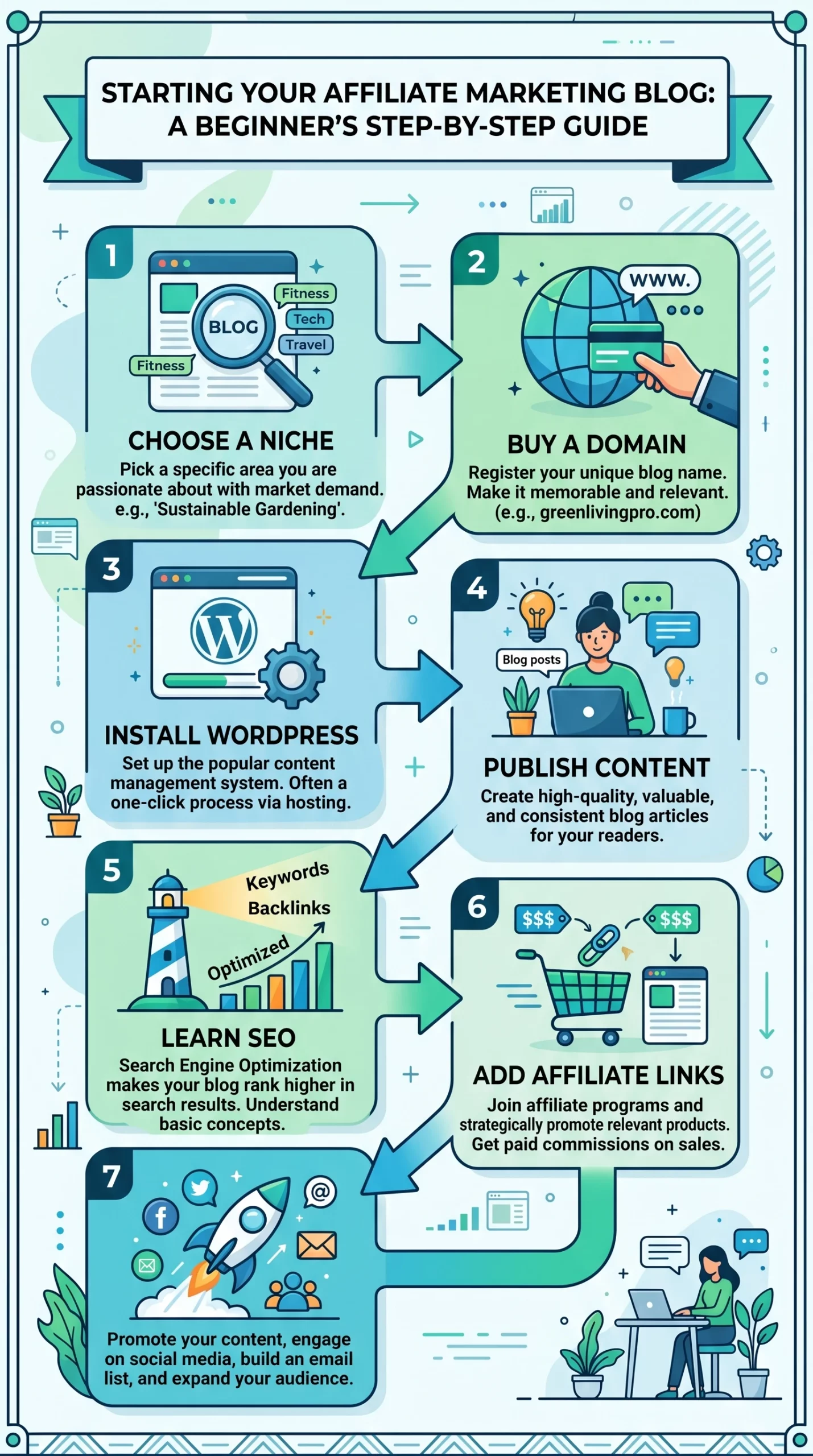
An affiliate website makes this possible, and with a solid step-by-step plan, you can get yours off the ground and running.
When I built my first affiliate website, I spent weeks overthinking everything: niche ideas, WordPress themes, hosting, logos. Looking back, I should have focused less on perfection and more on publishing useful content early. That first site taught me that consistency matters far more than fancy design.
Quick TL;DR
Building your first affiliate website involves picking a good niche, joining affiliate programs, buying a domain, setting up WordPress, publishing helpful content, and promoting your site. This guide is beginnerfriendly and practical, and I’ll sprinkle in some tips from my own adventure. Plus, there’s a subtle nudge to check out Wealthy Affiliate if you want extra support and free tools.
Why Affiliate Marketing Is So Beginner-friendly
Affiliate marketing is beginner-friendly because it requires no product creation, inventory, or customer support. You earn commissions by promoting other companies’ products through unique links. With consistent content creation and basic SEO skills, beginners can start generating traffic and affiliate income without significant upfront costs or technical expertise.
Affiliate marketing is about earning commissions by recommending stuff to others. Because you’re not responsible for inventory, shipping, or customer questions, the barriers to entry are low. I started because I wanted to earn some side income from home, and honestly, not dealing with product hassles made it way less stressful. The biggest mistake I see beginners make is thinking success happens overnight. Spoiler: It doesn’t! But if you’re patient and willing to learn, it’s well within reach.
This guide will teach you how to launch your first affiliate site, avoid common mistakes, and set yourself up for steady growth. All you need are some basic tech skills, curiosity, and a bit of hustle.
What Is an Affiliate Website?
An affiliate website is a content-based site that earns commissions by recommending products or services through tracked affiliate links. When visitors click these links and make purchases, the site owner earns a percentage. These sites typically use blogs, reviews, tutorials, or comparisons to attract search traffic and guide purchase decisions.
An affiliate website is a site that shares useful content and then earns commissions when readers click special links and buy things. You sign up for programs that brands and stores offer, get unique links, and weave them naturally in your posts. If someone clicks and buys, the seller tracks your link and pays you a percentage.
There are a few types of affiliate sites:
- Blog affiliate sites: Cover a topic broadly; lots of helpful articles sprinkled with affiliate links.
- Review websites: Focus on indepth product reviews (“Is This Gadget Worth It?”) and comparisons.
- Niche websites: Very focused topic, such as “budget home coffee gear.”
- Authority websites: Cover a niche in extreme depth with guides, reviews, news, and resources.
The basic flow: a visitor reads your content, clicks your affiliate link, and if they buy, you get a cut. Pretty simple and honestly pretty fun once you spot your first sale notification.
My First Affiliate Website Didn’t Look Impressive
When I built my first affiliate website, I honestly thought success depended on having a beautiful homepage and expensive tools. I spent days tweaking themes, fonts, and colors before publishing even a few articles.
What surprised me most was that the articles bringing my first affiliate clicks weren’t the “perfect” ones. They were simple posts answering very specific questions people were already searching for.
That experience completely changed how I approached affiliate marketing. Helpful content mattered far more than perfect design.
Subscribe to Qualify Wealth
Pick a Profitable Niche
A profitable affiliate niche should have strong buyer intent, evergreen demand, and enough related products to promote. Beginners should choose focused topics rather than broad markets to reduce competition. The goal is to create a niche site that can consistently attract search traffic and rank for long-tail keywords with commercial value.
Choosing the right niche (topic) is one of those spots where a little extra thought saves a lot of headaches. The best niches have people actively looking for solutions, evergreendemand, and plenty of products you can promote.
For example, a broad niche like “fitness” can be extremely competitive for beginners, but narrowing it down to something like “home workouts for busy parents” gives you a clearer audience and easier content opportunities.
Here’s what I look for in a good niche:
- Buyer intent: Are people reading because they’re ready to buy, not just browse?
One thing I learned early is that buyer-intent keywords convert much better than general informational topics. Someone searching “best ergonomic office chair for back pain” is much closer to buying than someone searching “how to sit better.”
- Problem solving: Does your topic actually help people?
- Evergreendemand: Not just a temporary fad.
- Affiliate product variety: More programs = more earning options.
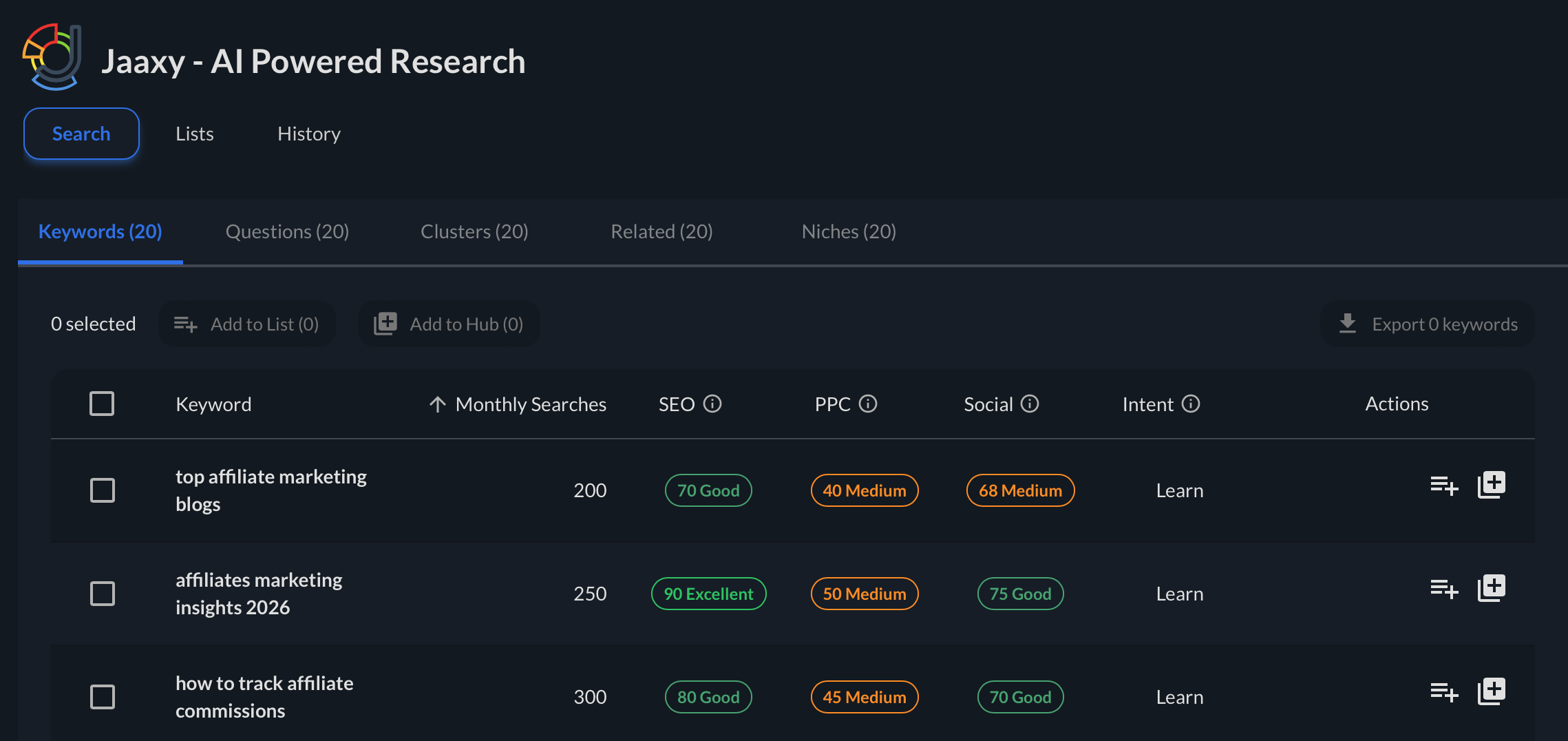
Some beginner friendly niche ideas:
- Fitness (especially at-home gear or routines)
- Home office and productivity
- Pets (training, toys, nutrition)
- Personal finance (budgeting, side hustles)
- Coffee (brewing, beans, gadgets)
- Camping/outdoor essentials
- Tech accessories (headphones, chargers)
Common niche mistakes:
- Choosing something only because it looks profitable (burnout is real when you have zero interest in the topic).
- Picking a niche you know nothing about (you’ll get stuck creating content).
- Going too broad (“health,” “business” – too much competition and too hard to stand out).
Mini checklist before you pick:
- Can you brainstorm 50+ article ideas?
- Are there plenty of affiliate products and programs?
- Are people searching Google for this topic?
Find Affiliate Programs to Join
Affiliate programs are partnerships where companies pay commissions for referred sales. Beginners can join networks like Amazon Associates or platforms like ShareASale and CJ Affiliate to access multiple brands. Key factors include commission rates, cookie duration, product quality, and conversion potential when selecting programs.
Affiliate programs are simply companies or networks offering to pay you a cut of sales from referrals. Commissions and sign up rules vary a lot. Some brands run their own inhouse (direct) programs, others use thirdparty networks.
Popular affiliate networks you’ll see:
- Amazon Associates: Easy for beginners, big product range, lower commissions but high trust.
Amazon Associates was one of the first affiliate programs I joined because it was beginner-friendly and easy to understand. Even though the commissions were smaller, it helped me learn how affiliate links, tracking, and commissions actually worked. And I still have it.
- ShareASale, CJ Affiliate, Impact: Let you find and join affiliate programs for hundreds of brands in one place, such as clothing, software, subscription boxes, more.
Things worth checking before you sign up:
- Cookie duration (how long you get credit after a click. Longer is better.)
- Commission rates (5–10% is pretty common; digital products often offer much more.)
- Quality of products (always try to recommend good stuff.)
I’ve found that recommending products you’d actually use, feel comfortable suggesting to a friend makes content much easier to write naturally and helps readers trust your recommendations more.
- How likely readers are to click, buy, and trust the offer.
Buy a Domain and Hosting
To build an affiliate website, you need a domain name and web hosting. The domain is your website address, while hosting stores your site files online. Beginners typically start with affordable shared hosting and choose a short, brandable domain name that is easy to remember and relevant to their niche.
Your domain is the web address where people find your site; web hosting is the service that stores and powers your website so it’s live online. Picking a good name and hosting is pretty straightforward.
Domain name tips I rely on:
- Short, easy to remember, and easy to spell
- No weird hyphens or numbers
- Brandable works better than keyword stuffing
Years ago, exact-match domains were much more popular for SEO, but today a clean and memorable brand name usually works better long term than something overly optimized like “bestcheapcoffeemakersonline.com.”
Hosting tips:
- Shared hosting is cheap and fine for new sites. As your site grows, consider managed WordPress hosting for more speed and less hassle.
- Don’t get suckered into expensive, unnecessary addons when you start.
- Skip free hosting, as it’s unreliable, slow, and often unsafe.
One beginner mistake I made was trying to save money with extremely cheap hosting. Slow loading speeds and downtime became frustrating quickly, especially once I started getting traffic.
Install WordPress
WordPress is a widely used platform for building affiliate websites because it is flexible, beginner-friendly, and supported by most hosting providers. Installation is usually one-click, and users can extend functionality using themes and plugins for SEO, design, speed, and affiliate link management without coding.
I recommend WordPress for beginners because it’s free, flexible, and there’s a huge community for help. Most web hosts offer oneclick WordPress installs, so you don’t need to code anything.
I remember expecting WordPress setup to feel technical and overwhelming, but most hosting companies simplify the process so much now that you can usually get a site online within minutes.
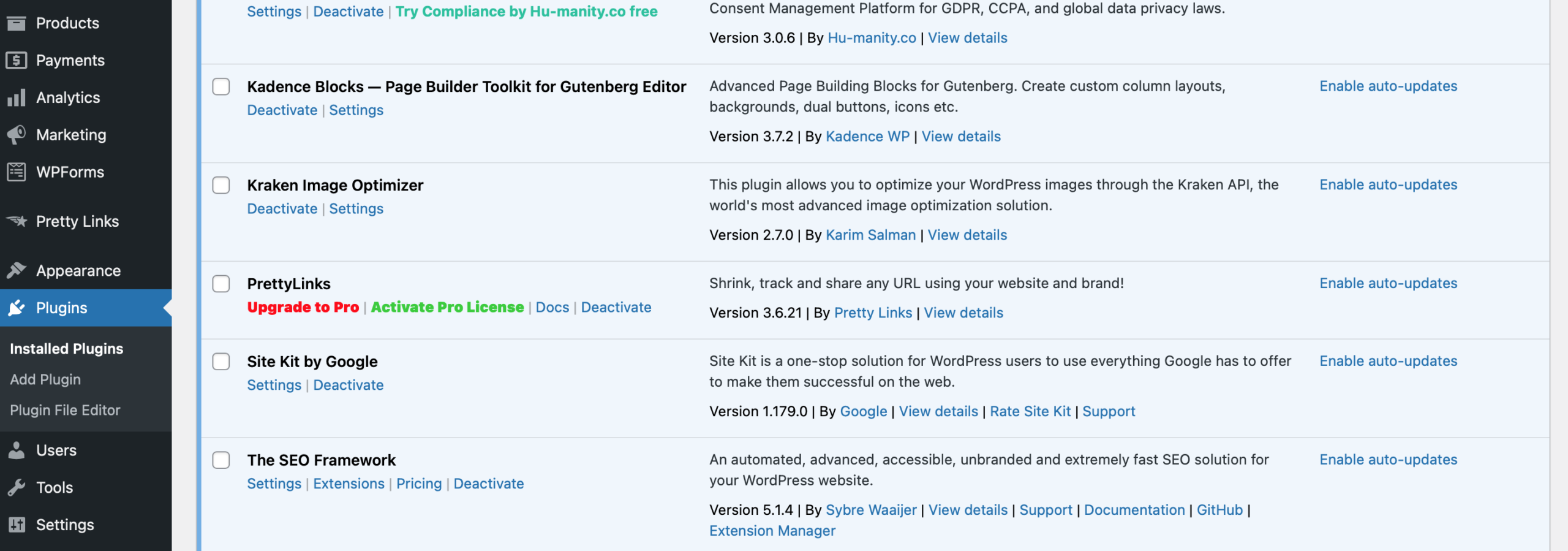
Your WordPress basics:
- Themes: Change how your website looks; plenty of free and paid options out there.
- Plugins: Add tools or features to your site. Super handy for things like SEO, contact forms, and speed boosts.
- Dashboard overview: You’ll edit articles, change plugins, and tweak settings here, all from one spot.
Plugins worth adding from day one:
- SEO plugin (like Yoast or Rank Math)
- Caching plugin (speeds up your site)
- Security plugin
- Link management plugin (to organize affiliate links)
It’s tempting to install dozens of plugins early on, but too many can slow your site down. Keeping your setup lightweight makes managing the site much easier as a beginner.
If you want beginner-friendly training, hosting, keyword tools, and community support in one place, Wealthy Affiliate is worth exploring while you build your site.
I’ll be your personal coach from day one.
Design Your Website the Right Way
A successful affiliate website uses a simple, fast, and mobile-friendly design. Essential pages include a homepage, blog, about page, contact page, and legal pages. Clean layouts improve user experience, increase trust, and help readers focus on content rather than distracting design elements or unnecessary features.
The first impression matters. Keep your design clean, simple, and focused. Avoid overwhelm with a simple home page, easy navigation, and just a couple of main colors.
Some of the highest-earning affiliate sites online actually have very simple designs. Readers care much more about fast-loading helpful content than fancy animations or complicated layouts.
Every affiliate site really needs:
- Homepage (clear about what you offer)
- Blog page
- About page (adds trust)
- Contact page (also builds trust, makes you real)
- Privacy policy and affiliate disclosure (legally required)
Why I like simple designs:
- Loads faster
- Makes content easier to read
- Works well on mobile (which is super important now)
A few design slip-ups to dodge:
- Too many flashy colors or fonts
- Busy, cluttered homepages
- Loads of distracting ads or popups
Early on, I thought adding more widgets and homepage sections made my site look professional. In reality, it just distracted readers from the content I wanted them to focus on.
Don’t spend days searching for the “perfect” theme. Most successful affiliate websites use simple, fast-loading designs because content and usability matter more than appearance.
What Matters Most for a New Affiliate Website
Looking back, these things mattered far more than I expected:
- Publishing consistently
- Writing genuinely useful content
- Learning basic SEO
- Internal linking
- Covering topics deeply
Things that mattered far less:
- Fancy logos
- Expensive themes
- Perfect homepage design
- Complex plugins
Many beginners focus heavily on appearance when Google mostly cares about usefulness and relevance.
How To Create Affiliate Content That Gets Google Traffic
Affiliate websites grow through helpful content that solves problems or supports buying decisions. Common formats include product reviews, comparisons, tutorials, and problem-solving guides. High-quality content aligned with search intent and optimized for SEO is essential for attracting organic traffic and generating affiliate conversions.
Your content is the engine of your website. Search engines like Google send visitors to pages that answer questions, solve problems, or help people with buying decisions. Helpful, well-optimized content brings more eyeballs, and more commission clicks your way.
One of the biggest mindset shifts for me was realizing affiliate content isn’t just about selling products. The best-performing articles usually solve a specific problem first and recommend products naturally afterward.
Key types of affiliate content to get into:
- Product reviews: “Best Budget Coffee Makers for Small Kitchens”
For example, instead of writing a generic “best laptops” article, a more focused article like “best lightweight laptops for college students” often has a better chance of ranking and converting.
- Comparisons: “Product A vs Product B”
- Tutorials: “How to Brew Better Coffee at Home”
- Problem solving guides: “Why Your Coffee Tastes Bitter”
Problem-solving articles are especially powerful because they attract readers already looking for solutions. Those readers are often more likely to trust related product recommendations.
Focus on being genuinely helpful. Help first, then link to products where relevant. That’s how you earn repeat readers and commissions. Make your articles super detailed, add pros, cons, and tips readers can use right away. It’s also a good move to include images or graphics where you can, since visual aids make information stick better.
Not Every Affiliate Article Performs Well
One mistake I made early was writing content based only on what I thought was interesting instead of what people were actually searching for.
For example, I once wrote a long article around a topic with almost no search demand. Even though the article was detailed, it barely received traffic because there wasn’t much real search interest behind it.
That taught me the importance of combining helpful content with keyword research.
Helpful Affiliate Content Performs Better Long-Term
Years ago, many affiliate websites ranked by publishing thin product pages stuffed with affiliate links. Google has become much better at filtering low-value content now.
Today, the affiliate sites that tend to perform best:
- Solve real problems
- Demonstrate expertise
- Help readers make decisions
- Build trust first
- Use affiliate links naturally
That shift is actually good news for beginners willing to create genuinely useful content.
My First Affiliate Website: What Actually Happened
When I built my first affiliate website, I expected traffic within weeks. That didn’t happen.
Here’s what actually happened:
- First 2–3 weeks: 0 traffic (everything was invisible on Google)
- Month 1–2: A few impressions started showing in Search Console
- Month 3: First real clicks from Google search
- Month 4+: Small but consistent traffic started building
What surprised me was that the articles I thought were “best” didn’t rank first. Instead, very specific posts targeting low-competition keywords started getting impressions first.
The biggest lesson: Google rewards specificity and consistency, not effort intensity.
Learn Basic SEO for Affiliate Websites
SEO helps affiliate websites rank in search engines by optimizing keywords, content structure, internal links, and user experience. Beginners should target long-tail keywords with low competition and focus on search intent. Proper SEO improves visibility, organic traffic, and long-term website growth without paid advertising.
SEO (Search Engine Optimization) is all about helping Google “find” and recommend your site to searchers. Even just learning beginner SEO goes a long way. Investing a bit of time in keyword basics sets up your pages for better visibility, so your hard work actually pays off.
Key concepts:
- Keywords: Words and phrases people type in to search; use these in your posts.
- Search intent: What is someone really looking for when they search?
I learned pretty quickly that ranking isn’t only about keywords. If someone searches “best beginner espresso machine,” they expect recommendations and comparisons, not a general history lesson about coffee.
- Onpage SEO: Headings, images, links, and formatting for easy reading.
- Internal links: Link your own posts together for more engagement.
Internal linking also helps readers stay on your website longer because it naturally guides them toward related topics they’re already interested in.
Beginner SEO tips:
- Target low competition keywords first (easier to rank).
One SEO mistake many beginners make is trying to rank for huge keywords immediately. Smaller long-tail searches usually bring faster wins and help build website authority gradually.
- Write complete, helpful content; avoid fluff or thin posts.
- Use headings (H2, H3) to structure content.
- Optimize images (small file size, descriptive names, and include keywords in alt text).
Common SEO slip-ups include keyword stuffing (unnatural writing), skipping search intent (writing what you want versus what people search for), and publishing thin or shallow content.
Example of a Better Beginner Keyword
One thing beginners often misunderstand is keyword competition.
For example: A keyword like:“best laptops” is extremely competitive.
But something more specific like: “best lightweight laptops for college students”
Usually gives smaller websites a much better chance of ranking because the search intent is narrower and competition is lower.Long-tail keywords like this helped me understand how smaller affiliate websites can compete without huge authority.
What Worked vs What Didn’t in My Early SEO Efforts
What worked:
- Targeting long-tail keywords like “best X for beginners”
- Writing full answers instead of short posts
- Internal linking between related articles
- Updating old posts instead of constantly creating new ones
What didn’t work:
- Writing very broad topics like “fitness tips”
- Ignoring search intent
- Publishing random topics without a clear niche structure
- Trying to rank too fast for competitive keywords
Key insight: SEO success came from narrowing focus, not expanding it.
Add Affiliate Links Naturally
Affiliate links should be placed within helpful content where they add value to the reader. Trust is essential, so recommendations should be honest, balanced, and relevant. Overusing or forcing links can reduce credibility and hurt performance, while naturally integrated links improve conversions and user experience.
Affiliate links need to be placed where they’re most helpful, not just dropped in everywhere. Trust with your reader is super important for conversions and longterm growth.
Readers can usually tell when a recommendation exists only for commissions. Honest reviews with balanced pros and cons tend to build far more trust over time.
How I like to add affiliate links:
- Only recommend products I’d use or have researched heavily.
- Share pros and cons.
- Show comparison tables for quick choices.
Comparison tables became one of my favorite content elements because they help readers make faster decisions without scrolling through huge blocks of text.
- Always disclose affiliate links to stay transparent and legal.
Stuff to avoid: putting links just for the sake of it, misleading your audience, or hyping unrealistic results. Also, don’t be afraid to update old articles as you find better products or get more experience in your niche. Your honesty and commitment to delivering good info will help you stand out.
Get Your First Visitors
Affiliate website traffic comes from SEO, Pinterest, social media, YouTube, and email marketing. Beginners should focus on one primary traffic source, usually SEO or Pinterest, before expanding. Consistent publishing and audience-focused content are key to building steady, long-term traffic growth.
Visitors come from search engines, social media, email, and even sites like YouTube. For beginners with limited time, it’s really important to pick one main source and learn it well before trying everything at once.
One of the easiest ways to burn out is trying to master SEO, Pinterest, YouTube, TikTok, and email marketing all at once. Focusing deeply on one traffic source first usually leads to faster progress.
Starter friendly traffic options:
- Google SEO (where most affiliate traffic comes from long term)
- Pinterest (great for certain niches; visual content wins)
Pinterest can work surprisingly well for visually driven niches because pins often continue driving traffic months after they’re published.
- Facebook groups (if you already have niche communities)
- YouTube (video reviews, guides, or comparisons)
- Email marketing (build a list over time for recurring visits)
I recommend sticking to SEO or Pinterest at first if you want free traffic. Paid ads can be risky and may eat up your budget with little result when you’re just starting out.
As you learn more, try experimenting with a secondary platform for traffic. For example, after nailing down SEO basics, see if YouTube videos or helpful Facebook posts also attract readers to your site. The key is to focus, master one source, then gently mix in some variety as your confidence grows.
Why Some Affiliate Websites Stay Stuck
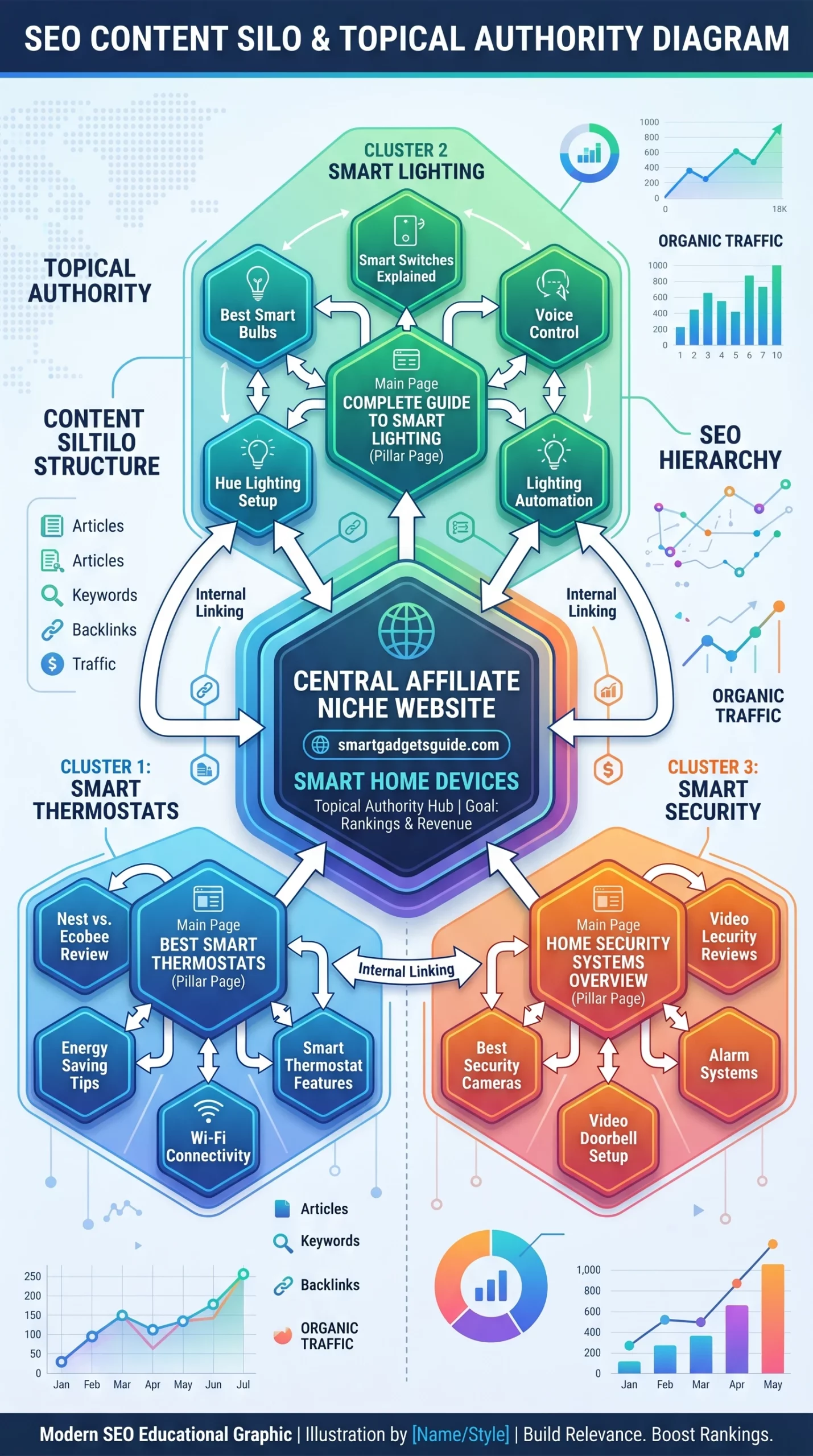
One pattern I’ve noticed is that many beginner affiliate sites publish random unrelated articles instead of building topical authority.
For example: A site about coffee suddenly publishing cryptocurrency articles confuses both readers and search engines.
The strongest affiliate websites usually stay tightly focused around one niche and build depth over time.
How Long Does It Take to Make Money?
Affiliate websites typically take several months to start generating consistent income because search engines need time to index and rank content. Early stages involve slow traffic growth, with earnings increasing gradually as content builds authority, rankings improve, and more pages begin attracting search visitors.
Affiliate marketing can be a slow build, especially at the start. Realistically, most new sites take several months to start showing regular commissions. The magic is in consistency, the more you learn and publish, the faster things compound.
My early mistake was expecting results too quickly. Affiliate websites often feel slow at first because Google needs time to crawl content, understand your site, and build trust signals.
What I’ve seen: content is like planting seeds. After a while, it starts to pop up everywhere, and visitors begin to trust your advice.
It’s definitely not a get-rich-fast thing, but the payoff is worth sticking with. If you push through the first few quiet months, your efforts will eventually pay off.
Some articles may barely get noticed initially, then suddenly start bringing traffic months later as your site gains more authority.
What Early Affiliate Growth Usually Looks Like
Many beginners expect traffic to grow steadily every week, but affiliate websites often grow unevenly.
A more realistic pattern looks like:
- First few months: very little traffic
- Gradual impressions in Google
- Small ranking improvements
- Occasional affiliate clicks
- Then sudden growth once content accumulates
That slow early phase is normal and catches many beginners off guard.
Common Beginner Mistakes
Common mistakes include quitting too early, ignoring SEO, targeting overly competitive niches, publishing inconsistently, and focusing on design instead of content. Many beginners also switch strategies too often, preventing long-term momentum and reducing the chance of building sustainable traffic and affiliate income.
- Giving up too soon (“I posted three articles and nothing happened, I guess it doesn’t work”).
- Poor content schedule; posting a burst then ghosting your site.
- Picking a niche without researching products or audience.
- Ignoring SEO, hoping visitors just magically appear.
- Writing just for traffic, not buyer intent.
- Switching strategies constantly.
I’ve seen many beginners restart their websites repeatedly because they think they chose the wrong niche too early. Usually, the bigger problem is simply not giving content enough time to grow.
Common Affiliate Marketing Misconceptions Beginners Believe
When people start building their first affiliate website, they often assume success depends on expensive tools, massive traffic, or quick results. In reality, many of the biggest beginner beliefs about affiliate marketing are misleading.
“You Need Thousands of Visitors to Make Money”
A smaller website with targeted buyer-intent traffic can outperform a huge site with random visitors. Helpful content that solves specific problems often converts better than chasing massive traffic numbers.
“You Need Expensive Tools to Succeed”
Many beginners successfully start affiliate websites using affordable hosting, free WordPress plugins, and free tools like Google Search Console and Google Analytics. Expensive software isn’t required early on.
“Affiliate Marketing Is Passive Immediately”
Affiliate websites can become semi-passive over time, but the early stages usually require consistent effort, content creation, and learning SEO fundamentals.
“Your Website Needs to Look Perfect Before Launching”
Many beginners delay publishing because they obsess over themes, logos, or homepage design. In most cases, helpful content matters far more than having a perfect-looking website.
“You Need to Be an Expert Before Starting”
You don’t need years of experience to begin. Many successful affiliate marketers simply learn as they go, improve their content over time, and document what they discover along the way.
“More Affiliate Links Means More Money”
Stuffing articles with affiliate links usually hurts trust and readability. Helpful recommendations placed naturally inside useful content tend to perform much better long term.
“SEO Results Should Happen Quickly”
Affiliate websites often grow slowly at first. It can take time for Google to crawl pages, understand your niche, and build trust in your content.
“Every Article Will Bring Traffic”
Not every article will rank or perform well immediately. Building an affiliate website is usually about creating a growing library of helpful content that compounds over time.
Why Most Beginner Affiliate Sites Never Grow
After seeing many beginner sites, a clear pattern emerges:
Most sites fail not because of SEO difficulty, but because of inconsistency.
Common pattern:
- 5–10 articles published
- No traffic yet
- Motivation drops
- Site abandoned
The sites that succeed usually don’t start better, they just continue longer.
Consistency beats early skill level in almost every case.
What I’d Do Differently If I Started My First Affiliate Website Today
Looking back, there are several things I’d approach differently if I were building my first affiliate website from scratch again. Most beginner mistakes aren’t caused by lack of intelligence, they usually happen because it’s easy to get distracted by all the advice, tools, and strategies online. Here’s what I’d focus on now.
I’d Stop Obsessing Over Website Design Early
One of the biggest mistakes I made was spending far too much time tweaking logos, colors, homepage layouts, and WordPress themes before I even had real traffic. A clean, simple website is more than enough when you’re starting out.
Today, I’d focus much more on:
- Publishing helpful content
- Improving article quality
- Learning SEO basics
- Building consistency
Good content beats fancy design almost every time, especially for new affiliate websites.
I’d Choose a Narrower Niche
When beginners pick broad niches like “fitness” or “technology,” they often end up competing against huge websites immediately. If I started again today, I’d narrow my niche much sooner.
Instead of:
- Fitness
I’d choose:
- Home workouts for beginners
- Resistance band workouts
- Fitness for busy parents
Smaller niches make content creation easier and help Google better understand what your website is about.
I’d Publish More Content Faster
Early on, I spent too much time trying to make every article perfect. Now I understand that consistency matters much more than perfection in the beginning.
If I restarted today, I’d aim to:
- Publish consistently every week
- Build topical authority faster
- Cover related subtopics early
- Create clusters of helpful content
The faster you build a strong content foundation, the easier long-term SEO growth becomes.
I’d Focus on Search Intent Earlier
At first, I mostly thought SEO was about keywords. Over time, I realized understanding search intent matters even more.
For example:
Someone searching:
- “Best beginner espresso machine”
Usually wants:
- Product recommendations
- Comparisons
- Buying advice
They probably do not want:
- A long history of coffee machines
Today, I’d spend more time understanding what readers actually expect before writing articles.
I’d Build an Email List Earlier
This is something many affiliate beginners ignore. I waited too long before collecting emails because I thought I needed massive traffic first.
If I started again, I’d begin building an email list early by offering:
- Beginner guides
- Checklists
- Resource lists
- Simple tutorials
Even a small email list can become a valuable long-term traffic source.
I’d Focus on One Traffic Source First
Trying to learn SEO, Pinterest, YouTube, TikTok, and Facebook all at once can become overwhelming quickly. I’ve found that beginners usually make faster progress when they focus deeply on one platform first.
If I started again today:
- I’d focus primarily on SEO
- Then expand into Pinterest or YouTube later
Mastering one traffic source first creates momentum and prevents burnout.
I’d Worry Less About Competition
One thing I misunderstood early on was competition. Seeing large websites ranking on Google made me think there was no room for beginners.
But smaller websites can still succeed by:
- Targeting low-competition keywords
- Solving specific problems
- Covering niche topics deeply
- Building trust over time
You don’t need to outrank giant sites everywhere. You only need to become genuinely useful within your niche.
My Biggest Lesson
The biggest thing I’d do differently today is simple: I’d stop waiting for the “perfect plan” and start publishing useful content sooner.
Most successful affiliate websites grow because their owners stay consistent long enough to improve, learn SEO gradually, and build trust with readers over time.
Simple First 90-Day Plan
A basic 90-day affiliate plan includes choosing a niche, setting up a WordPress site, publishing initial content, learning SEO fundamentals, and gradually optimizing older posts. By month three, beginners should focus on improving content quality, adding affiliate links, and starting one consistent traffic strategy.
- Month 1: Pick your niche, buy your domain and hosting, set up your WordPress site, publish your first 10 articles.
- Month 2: Study SEO basics, keep publishing, start linking related articles together.
- Month 3: Optimize old articles, add affiliate links, start sharing your posts or try one social platform.
Sticking to this plan helps you develop a steady pace and keeps you moving forward instead of stuck in research mode. Remember: improvement matters more than perfection early on.
| Time Period | What Usually Happens | Common Beginner Reaction | What You Should Actually Do |
|---|---|---|---|
| First 2 Weeks | Site gets indexed slowly, almost no traffic | “Something is wrong” | Keep publishing content |
| Month 1 | First Google impressions appear | Checking analytics obsessively | Focus on consistency |
| Month 2 | Some pages begin ranking for small keywords | Comparing yourself to big sites | Improve internal linking |
| Month 3 | First clicks and small traffic increases | Expecting commissions immediately | Continue building topical authority |
| Month 4–6 | Traffic starts compounding slowly | Doubting niche choice | Double down on content quality |
| Month 6+ | Older articles may suddenly rank better | Considering redesigns | Optimize existing content |
Early Progress Often Looks Small
One thing that helped me stay motivated was paying attention to small progress markers:
- First Google impressions
- First indexed articles
- First affiliate click
- First comment
- First page ranking
Those small signs usually appear long before meaningful income does.
Momentum Matters More Than Motivation
One thing I underestimated early on was how important momentum becomes.
Publishing consistently, even imperfectly, builds:
- Writing speed
- SEO understanding
- Confidence
- Content library growth
Waiting for motivation or perfection usually slows progress much more than beginners realize.
Subscribe to Qualify Wealth
Handy Tools for Beginners
Beginner affiliate marketers use tools like Google Search Console, Google Analytics, keyword research tools, WordPress SEO plugins, Canva for visuals, and email platforms like MailerLite. These tools support content creation, SEO optimization, traffic tracking, and website management without requiring advanced technical skills.
- Keyword research: Google autocomplete, Ubersuggest, AnswerThePublic.
- SEO plugins: Yoast, Rank Math.
- Graphic creation: Canva (for quick blog graphics, Pinterest pins, and comparison charts).
- Email marketing: MailerLite or ConvertKit (free at first, good for collecting emails).
- Analytics: Google Search Console and Analytics (free, gives insight on site performance).
Google Search Console became one of the most valuable free tools I used because it showed which keywords were already bringing impressions, even before my site had much traffic.
These tools help you create better content, improve site speed, and manage your earnings without a steep learning curve. Many of them are free or have free tiers so you can start using them right away.
What Surprised Me Most About Affiliate Websites
What surprised me most wasn’t how difficult affiliate marketing was, it was how much consistency mattered.
Small improvements made repeatedly:
- Better articles
- Better keyword targeting
- Better internal linking
- Better understanding of readers
Eventually started compounding into meaningful traffic and affiliate commissions.
That gradual compounding effect is what makes affiliate websites powerful long-term assets.
If you’re ready to stop guessing and start building, I’d love for you to see what finally worked for me. This training was the turning point in my business. You can see my honest thoughts and the results right here.
Check out the review
Frequently Asked Questions
How much does it cost to build an affiliate website?
Most beginners can start building an affiliate website for under $100 using affordable hosting, a domain name, and free WordPress tools.
Can beginners make money with affiliate marketing?
Yes, beginners can make money with affiliate marketing by creating helpful content, learning basic SEO, and staying consistent over time.
How long does it take to earn affiliate commissions?
Most affiliate websites take several months before generating consistent traffic and affiliate commissions.
Do I need WordPress for affiliate marketing?
No, but WordPress is one of the best beginner-friendly platforms because it’s flexible, easy to use, and SEO-friendly.
What is the best affiliate niche for beginners?
Good beginner niches include fitness, coffee, pets, personal finance, home office, and tech accessories with strong buyer intent.
How many articles should a new affiliate website publish?
Most beginners should aim to publish 25-30 helpful articles early to build topical authority and SEO momentum.
Is affiliate marketing still worth it in 2026?
Yes. Helpful content, SEO, and trustworthy recommendations still create strong affiliate marketing opportunities in 2026.
Can I build an affiliate website without technical skills?
Yes. Most hosting companies offer simple WordPress setup tools, making affiliate websites beginner-friendly without coding knowledge.
Wrapping Up (And a Friendly Invite)
Affiliate websites grow through consistent publishing, helpful content, and basic SEO applied over time. Success depends more on patience and execution than shortcuts. Beginners can accelerate learning by using structured training platforms and focusing on long-term content growth rather than immediate results.
An affiliate site can be a fun, lowcost way to build a side income (or even more), but it only works if you focus on being helpful and stick with it. Consistent publishing, honest recommendations, and learning a bit each week will set you ahead.
If you want stepby-step training, tools, and support, Wealthy Affiliate is worth checking out. It’s where I got a lot of my early help, and you can try it for free with no commitment.
Helpful content and consistency matter more than flashy tricks. Enjoy the process, soak up what works, and your first affiliate website might just surprise you.
Disclosure: This article contains affiliate links. If you purchase through them, I may earn a commission at no additional cost to you. I only recommend tools and platforms I genuinely believe are useful for beginners.

About Daniella
Founder of several online businesses, creator of SociaLinker, constantly refining the art of earning.
Helping new marketers bypass the “Frankenstein” phase. I don’t believe in patchwork tools, I believe in what works.