
How To Set Realistic Affiliate Marketing Goals – Beginner Guide
Affiliate marketing is a performance-based business model where creators earn commissions by promoting products through content such as blogs or social media. While it is often portrayed as a fast income opportunity, real-world results typically require months of consistent content creation, SEO learning, and audience building. Setting realistic goals helps beginners maintain motivation, track measurable progress, and avoid burnout during the slow initial growth phase.
Affiliate marketing can be rewarding, but unrealistic expectations cause many beginners to quit too early. When I started affiliate marketing, I expected to see results within a few weeks. In reality, it took me nearly 4 months to earn my first commission and about 6 months before I saw steady organic traffic coming from Google.
Instead, I learned that setting realistic affiliate marketing goals was the key to staying motivated and making consistent progress.
In this guide, I’ll share practical goal-setting strategies, beginner milestones, and lessons from my own experience building affiliate websites.
TL;DR
Affiliate marketing works best when beginners set realistic, incremental goals rather than expecting fast income. Success typically comes from consistent content creation, basic SEO learning, and gradual traffic growth. Tracking small milestones like first clicks, traffic increases, and early commissions helps maintain motivation and build long-term, sustainable results without burnout.
If you’re looking for a quick summary: Affiliate marketing works best when you set achievable, step-by-step goals. Forget overnight riches. Steady effort, learning as you go, and adjusting your goals leads to stronger results and fewer headaches. Clear targets and honest tracking make a real difference.
Why Realistic Goals Matter in Affiliate Marketing
Realistic goals in affiliate marketing help beginners avoid burnout and maintain consistent progress by aligning expectations with actual learning curves, traffic growth timelines, and income variability. Instead of expecting quick profits, marketers who set incremental targets are more likely to stay motivated, improve skills steadily, and achieve sustainable long-term results.
The promise of passive income often lures people into affiliate marketing, and I’ll admit, I fell for it in the beginning. The real win comes from setting targets that match your experience, resources, and market possibilities.
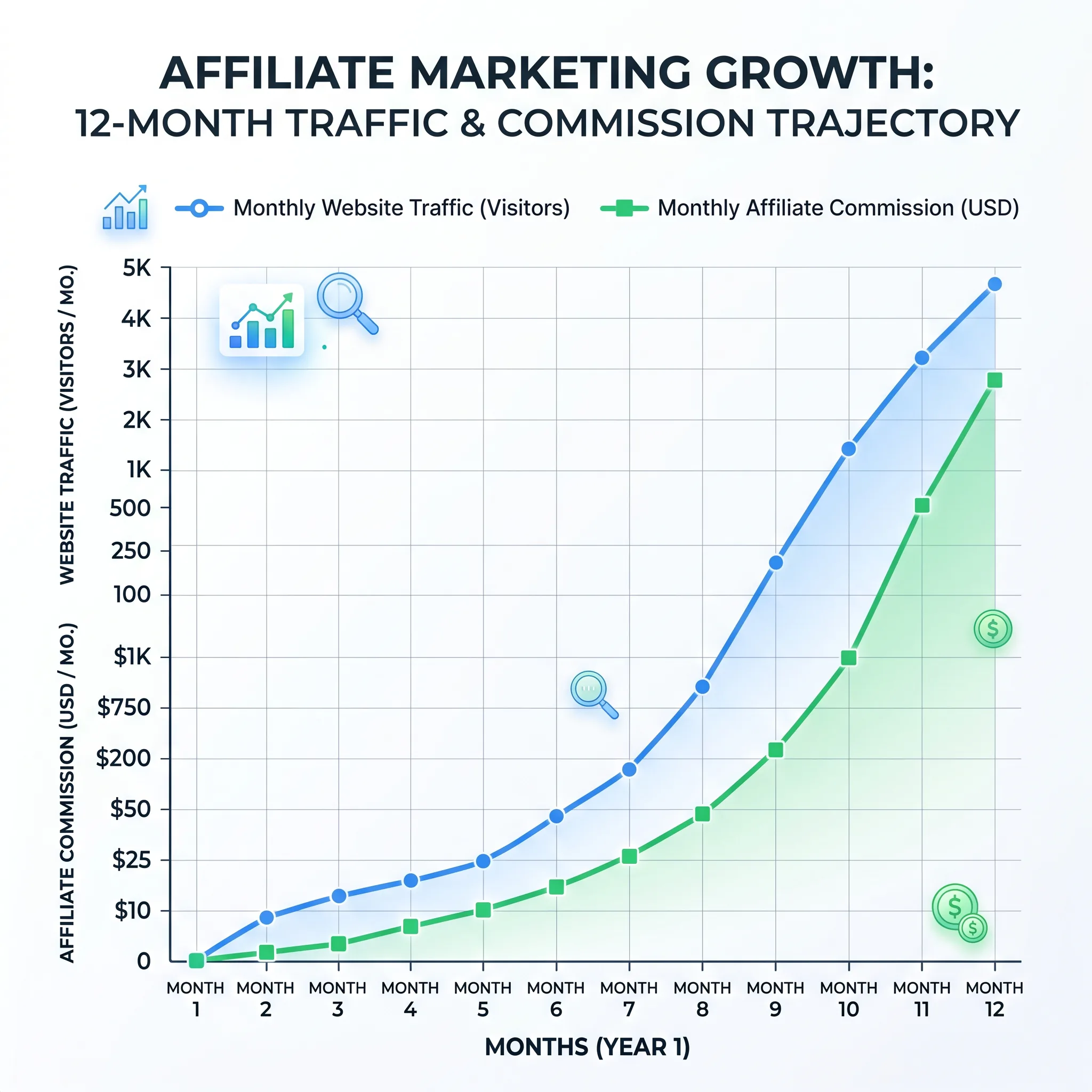
One thing that surprised me early on was how long SEO results can take. Many affiliate articles need several months before they start ranking consistently in Google search results.
Google has repeatedly emphasized the importance of creating helpful, people-first content rather than content designed only to manipulate search rankings.
Understanding that timeline helped me focus more on creating useful content instead of expecting immediate traffic or commissions.
People who go all in with huge expectations often end up frustrated. I’ve watched it happen plenty of times in online forums and communities.
The beauty of realistic goals is that they keep you grounded and encourage steady growth. Whether you want to earn your first dollar or build up to a part-time income, breaking things down into manageable steps keeps the pressure at bay.
If you measure progress by actual effort and learning, rather than wild dreams, staying motivated becomes a lot easier.
Industry research also shows that affiliate marketing growth often takes time, especially for beginners building traffic through content and SEO.
Reality vs Expectation in Affiliate Marketing
Most beginners assume affiliate marketing is a traffic and income problem, but in practice it is a consistency and iteration problem. The biggest bottleneck is not choosing affiliate programs or adding links, but producing enough high-quality content over time while waiting for SEO to mature. This gap between expectation (fast results) and reality (delayed feedback loops) is where most people quit.
Understanding the Affiliate Marketing Process
Affiliate marketing involves selecting a niche, building a content platform such as a blog or YouTube channel, creating helpful content, driving traffic through SEO or social media, and earning commissions when users click affiliate links and make purchases. Success depends on consistent content creation, audience trust, and understanding how different traffic sources convert over time.
Before setting goals, it helps to know what you’re really getting into. Here’s what’s usually involved in affiliate marketing, especially when starting out:
- Choosing a Niche: Picking a topic you care about (and one with an audience ready to buy) is a great starting block.
- Building a Platform: Most folks start with a blog, YouTube channel, newsletter, or social following. I picked blogging, mostly because I love to write and tinker with websites.
- Content Creation: Writing or creating honest reviews, tips, or tutorials around your chosen products.
- Driving Traffic: SEO, social media, email, these are all the ways you help people stumble upon your content. This part can require creative thinking, and learning how to make the most of free and paid methods will help you stand out.
- Converting Visitors: Encouraging people to click your affiliate links and, hopefully, make a purchase.
Conversion rates can vary significantly depending on your content quality, audience trust, and how naturally affiliate recommendations fit into your articles.
Simple improvements like clearer calls to action, comparison tables, and honest product reviews can often improve conversions without needing more traffic.
All of these steps can be broken down further into mini goals, making progress easier to track and celebrate.
It’s also important to remember affiliate marketing is not just about pushing products but about fostering trust with your audience.
This means always prioritizing helpful content over hard sales pitches. The more genuinely helpful you are, the more followers will return, and the more likely those clicks will lead to sales.
Keyword research is another important part of affiliate marketing that beginners often overlook. Choosing topics people are already searching for can make it much easier to grow traffic over time.
Even learning basic keyword research skills can help you create content that has a better chance of ranking in search engines and attracting targeted visitors.
Learning basic SEO fundamentals can also improve your chances of attracting long-term search traffic over time.
Subscribe to Qualify Wealth
What Actually Moves Rankings in Affiliate Marketing
In practice, rankings are influenced less by isolated tactics and more by content consistency, internal linking structure, and topical coverage depth.
New affiliate sites rarely rank from a single “perfect” article. Instead, rankings tend to appear once a cluster of related content signals topical authority to search engines.
Beginner Affiliate Marketing Milestones
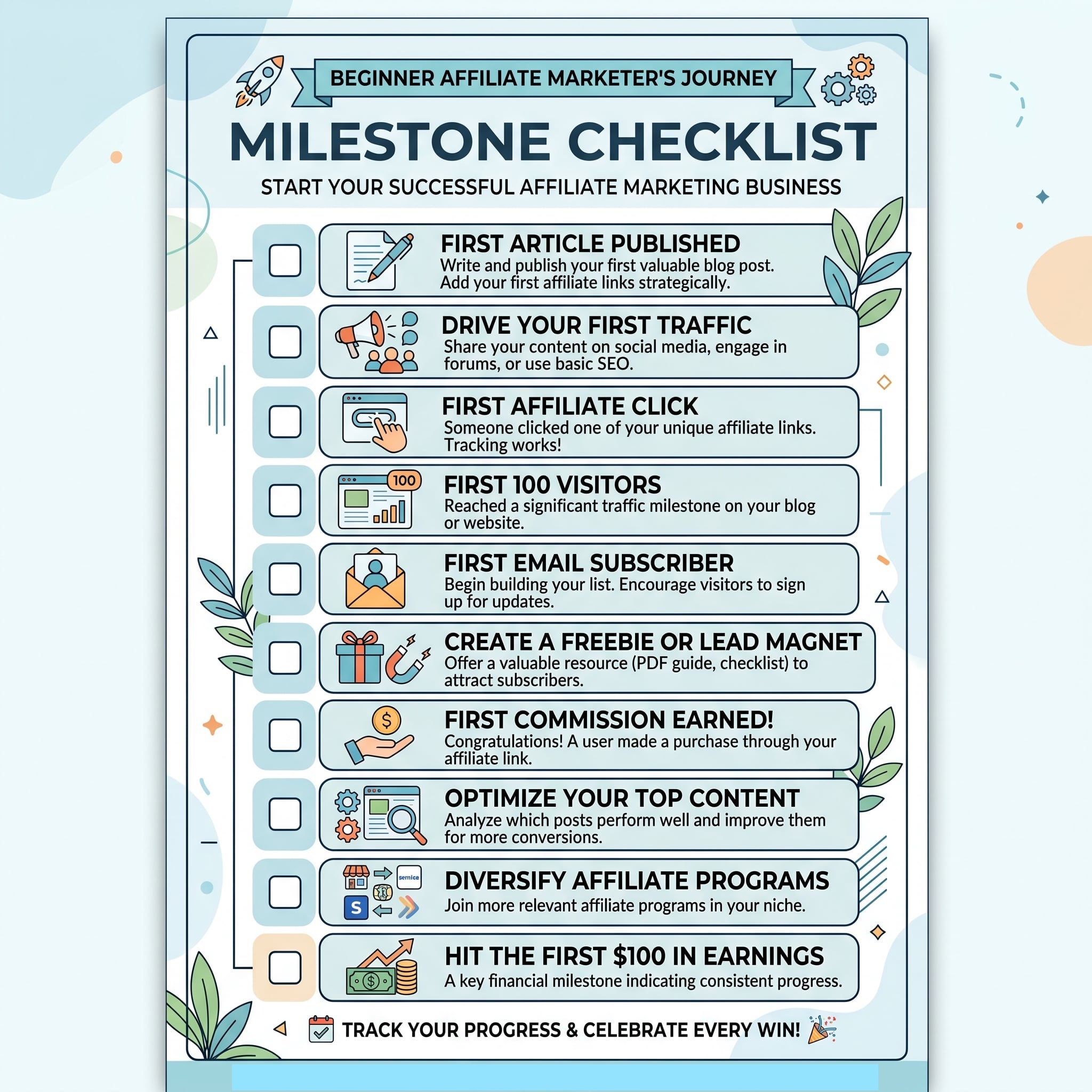
Beginner affiliate marketing milestones typically include publishing initial content, earning first affiliate clicks, reaching early traffic benchmarks like 50–500 monthly visitors, and generating first commissions. These incremental goals help new marketers track progress, build confidence, and understand what actions contribute most to growth before scaling into larger income targets.
Trying to make $10,000 in your first month is a recipe for disappointment. Setting achievable milestones, on the other hand, tees you up for consistent wins. Here are some examples, straight from my own adventure and conversations with others in the affiliate world:
- First Click: Celebrate the first time someone actually clicks your affiliate link. It means your content resonated! (I still remember mine, it was a small win, but a huge motivator.)
- First Sale: My first affiliate commission was just $3.87, but I still remember how motivating it felt because it proved someone trusted my recommendation enough to buy.
- Content Goals: For many beginners, publishing 20–30 high-quality articles within the first 6 months is a much more realistic goal than expecting full-time income immediately.
- Traffic Milestones: Hitting 50, 100, or 500 monthly visitors feels huge at first. Getting those first regular eyeballs is worth celebrating. One of my first affiliate sites took around 5 months to reach 100 monthly visitors and nearly 8 months to pass 500 visitors. Those numbers felt small at the time, but they proved the SEO work was starting to gain traction.
- Income Targets: A lot of beginner affiliate sites make little to no money during the first few months. Reaching your first $100 in affiliate commissions within your first year is actually a solid milestone for many new marketers. Slow and steady is the name of the game, those jumps add up and help you plot your next step.
Each step makes the next one feel more doable and gives you confidence.
Creating helpful affiliate content is not just about adding links to products. It’s also important to understand search intent. Understanding search intent is an important part of creating content that aligns with what users actually want to find online.
Some readers want beginner guides, others want product comparisons, and some are ready to make a purchase. Matching your content to what readers are actually searching for can improve engagement and conversions over time.
How to Create SMART Affiliate Marketing Goals
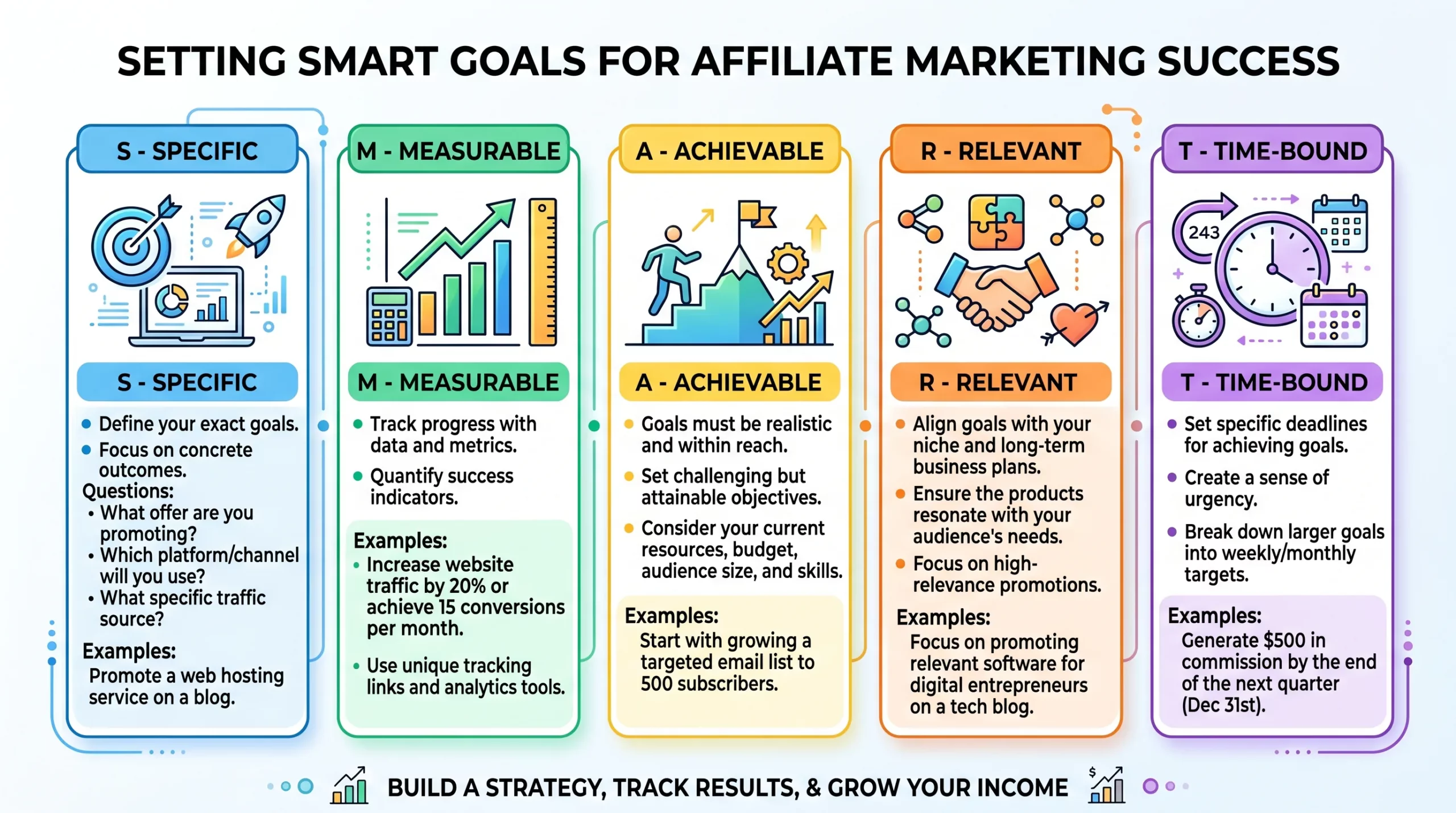
SMART affiliate marketing goals are defined as Specific, Measurable, Achievable, Relevant, and Time-bound targets that help structure progress. Instead of vague ambitions like “make money online,” beginners should set clear goals such as publishing a set number of articles within a timeframe or reaching defined traffic milestones to ensure consistent, trackable progress.
One of the best ways to stay focused in affiliate marketing is by using SMART goals:
- Specific: Define exactly what you want to achieve.
- Measurable: Track progress using numbers or milestones.
- Achievable: Set goals that match your current experience and time available.
- Relevant: Focus on actions that support long-term business growth.
- Time-Bound: Give yourself deadlines to stay accountable.
For example:
“Publish 10 helpful affiliate articles within the next 30 days.”
This is much more effective than simply saying: “I want to make money online.”
The biggest mistake I see is copying someone else’s blueprint without considering your own availability, skills, and interests. Here’s how I recommend approaching it:
- Audit Your Schedule: Be honest about how many hours a week you can commit. Consistency matters more than gigantic bursts of effort. Tracking your time and progress together helps set realistic expectations.
- Use Your Strengths: If you love video, build a YouTube channel. If you prefer writing, start a blog. Enjoy talking? Try podcasting or live demos. Leaning into what you enjoy keeps things sustainable long-term.
- Consider Your Budget: Plan free? Lean on free tools and sweat equity. Have some cash to invest? Consider paid traffic or design help, but start small and track what works. Investing wisely in tools or courses can truly give a boost when you have the means.
Setting goals that work for your lifestyle makes it way more likely you’ll stick with your plan, and allows for growth at your own pace.
90-Day Affiliate Marketing Goal Plan
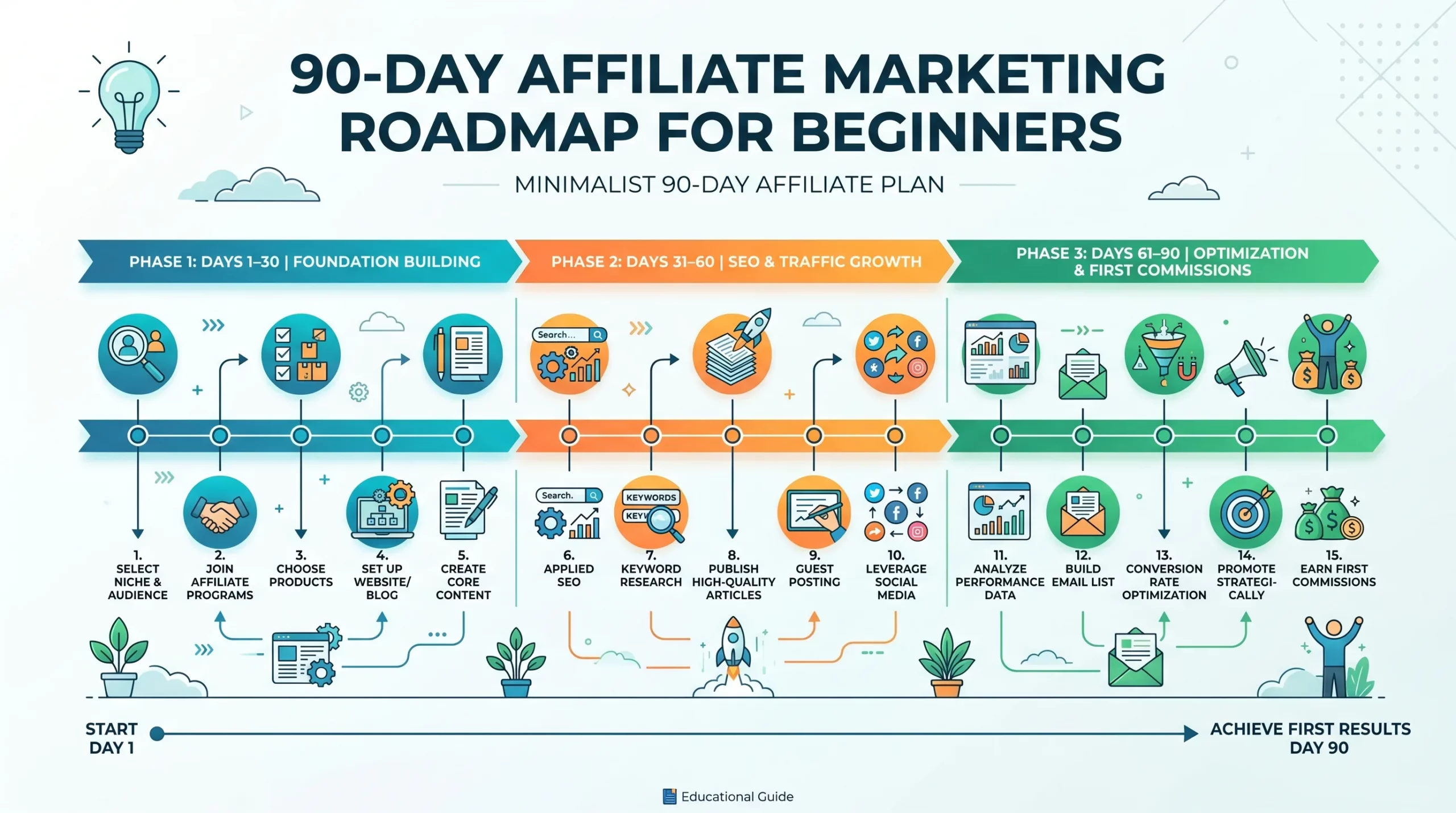
A 90-day affiliate marketing plan breaks progress into three phases: building a foundation with niche selection and initial content, developing SEO and traffic through consistent publishing, and optimizing performance by improving content and tracking results. This structured timeline helps beginners focus on execution, build momentum, and achieve early measurable results such as traffic growth or first commissions.
One of the easiest ways to stay motivated in affiliate marketing is to focus on short-term progress instead of massive long-term income goals. A simple 90-day plan helps break the process into manageable steps while giving you clear milestones to work toward.
Here’s a realistic example for beginners:
| Timeframe | Primary Focus | Example Goals |
|---|---|---|
| Days 1–30 | Build Your Foundation | Choose a niche, set up your website or platform, join 1–2 affiliate programs, and publish your first 5 pieces of helpful content. |
| Days 31–60 | Learn Traffic & SEO Basics | Learn basic keyword research, improve on-page SEO, publish 5–10 more articles, and begin tracking traffic and affiliate clicks. |
| Days 61–90 | Optimize & Measure Progress | Update older content, improve calls to action, experiment with promotion strategies, and aim for your first affiliate commissions or consistent traffic growth. |
The goal during your first 90 days is not to make life-changing income. It’s to build habits, create useful content, and develop a system you can improve over time.
For many beginners, simply reaching milestones like:
- publishing 10–20 articles,
- getting your first 100 monthly visitors,
- or earning your first commission,
is already meaningful progress.
Affiliate marketing usually rewards steady improvement more than quick wins. Small gains made consistently often lead to much bigger results later on.
Expected Timeline Reality
While early milestones like publishing content and generating clicks can happen within weeks, meaningful search traffic typically lags behind publishing by 2–6 months.
This delay is due to indexing time, ranking evaluation, and competition filtering. As a result, the first 90 days are usually focused on input (content creation), not output (income).
How to Track Your Affiliate Marketing Progress
Tracking affiliate marketing progress involves monitoring metrics such as content published, website traffic growth, affiliate link clicks, and early conversions. These indicators help marketers understand which strategies are working, identify areas for improvement, and make informed adjustments. Early-stage success is often measured more by activity and trends than immediate income.
One of the trickiest parts of affiliate marketing is not knowing if you’re on the right track, especially early on, when results come slow. Getting in the habit of tracking your actions, not just your results, made all the difference for me. Here’s what actually helped:
- Content Count: How many new posts or videos did I publish this month?
- Traffic Trends: Is my search or social traffic creeping up, even if it’s just by a handful of visitors? Watching the bumps in traffic, even if small, can be surprisingly motivating.
- Clickthroughs: My first handful of affiliate link clicks were a huge pat on the back.
- Sales: Celebrate early. Even cents count at first! These early wins, no matter how small, are proof you’re headed somewhere.
If things stall, don’t be afraid to tweak your approach. Try new topics, mix up call-to-actions, or experiment with different traffic sources. I’ve changed gears multiple times and always learned something in the process.
Analytics tools can also help you understand which content performs best. Tracking metrics like page views, click-through rates, and time on page can reveal which topics attract visitors and which articles may need improvement.
Common Affiliate Marketing Mistakes to Avoid
Common affiliate marketing mistakes include chasing too many strategies at once, switching niches too frequently, targeting overly competitive keywords too early, and comparing results with more experienced marketers. These behaviors often slow progress and reduce focus. Successful beginners typically prioritize consistency, simplicity, and gradual skill development over rapid experimentation or unrealistic expectations.
I wish someone had prepped me for the inevitable hurdles. Here are a few to watch for, along with what helped me push through:
- Shiny Object Syndrome: New tools, new programs, or new niches always seem tempting. Pick one strategy and stick with it. Focus beats switching up a hundred times.
- Slow Progress: SEO-driven affiliate marketing often moves slowly in the beginning. Some articles may take 3–6 months before they start ranking consistently in search engines. Hitting an early plateau? Step back, analyze what’s working, and adjust, don’t quit too soon.
- Overwhelm: There’s always more to learn. Prioritize the basics: Good content, clear calls to action, a simple site structure.
- Comparing Yourself: Seeing someone else’s big win on social stings, but their adventure is not yours. Use it for inspiration, not a measuring stick.
I’ve also made mistakes like targeting overly competitive keywords too early and spreading myself too thin across multiple affiliate programs. Simplifying my strategy helped me make more consistent progress.
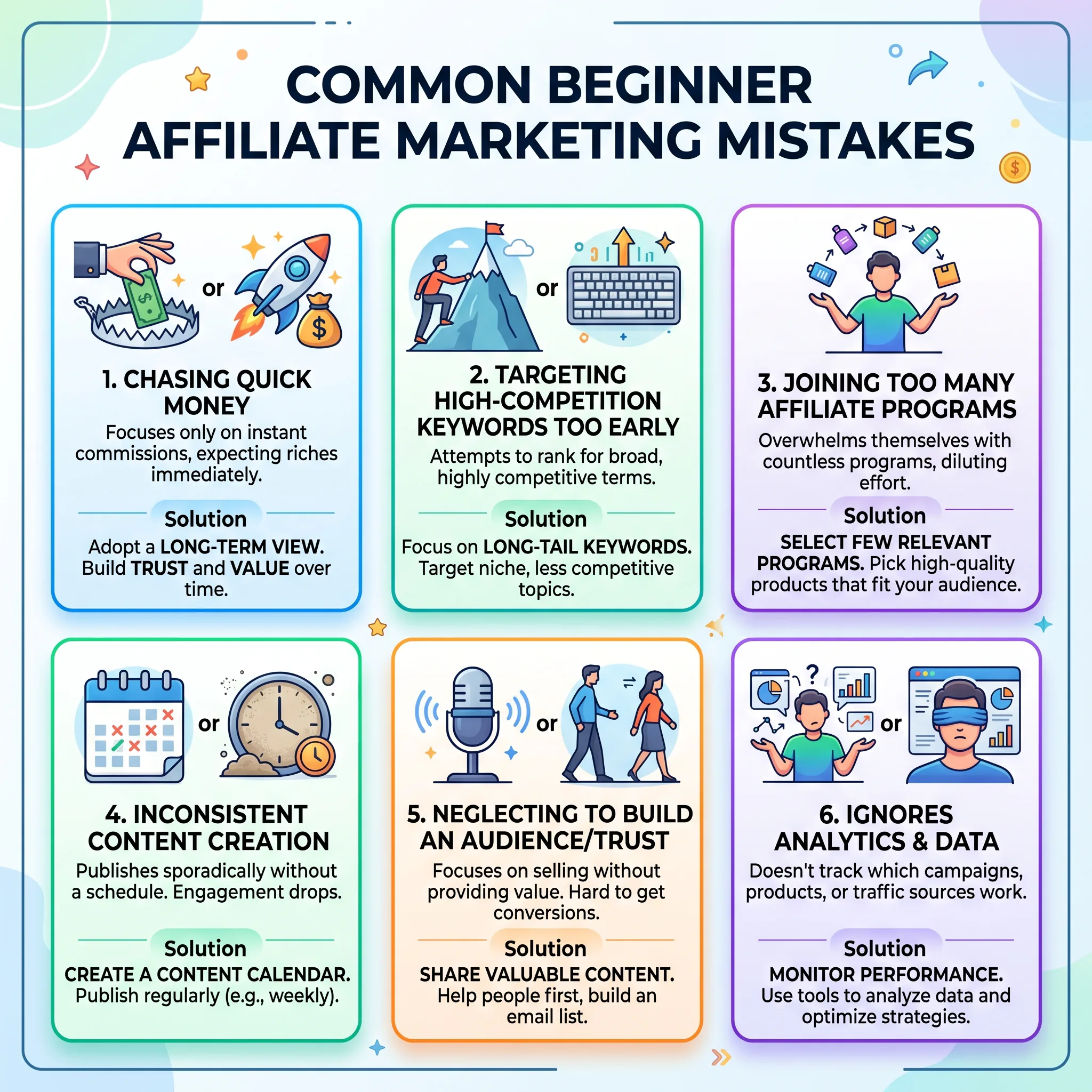
Another common mistake is choosing extremely competitive niches too early. Topics like finance, fitness, and software can be difficult for new websites to rank for because they are dominated by established brands. Starting with a narrower niche or more specific topics is often a smarter long-term strategy.
Managing expectations made everything feel more sustainable for me, and gave me room to celebrate my pace. Remember, everyone’s starting point is different, and your pace doesn’t define your potential.
Common Failure Pattern in Affiliate Marketing
A common pattern among beginners is publishing 5–10 articles, seeing no traffic within a few weeks, and assuming the strategy is broken.
In reality, most new affiliate sites take several months before Google begins consistently indexing and ranking content.
The mismatch between publishing effort and delayed SEO feedback is one of the main reasons beginners quit too early.
How to Scale Your Affiliate Business Realistically
Scaling an affiliate business involves expanding content output, improving SEO, diversifying income streams, and optimizing existing posts for better conversions. Once initial traction is achieved, marketers may introduce email lists, update older content, and experiment with paid traffic. Sustainable scaling depends on reinvesting effort into proven strategies rather than overextending into new channels too early.
Once you’ve hit your first mini milestones, you might start getting that itch to take things up a notch. Here’s where things get interesting:
- Switch Up Income: Try adding new offers, joining better paying affiliate programs, or testing different product types. Broader options mean more earning potential.
- Email List Building: Building a list means you’re not completely at the mercy of algorithms. Even an email list with 50–100 subscribers can become valuable because those readers already trust your content and are more likely to return to your recommendations. Focus on collecting emails ethically and nurturing those subscribers with real value.
- Optimize Old Content: Go back, improve headlines, add new information, and test new offers on older posts that are getting traffic. I’ve updated older affiliate posts by improving headlines, refreshing information, and adding clearer calls to action, and in some cases traffic increased within a few weeks.
- Experiment with Paid Traffic: Once you’re earning consistent income, consider small spends to speed up traffic growth. Just keep an eye on your budget, focus on tracking ROI.
Tracking, testing, and tweaking are ongoing habits that help experienced affiliate marketers stay ahead.
I’ve personally found that revisiting and updating old posts often brings the best returns for the time invested, as search engines favor refreshed content and readers find greater value in updated information.
As affiliate sites grow, many marketers eventually focus on building an email list alongside SEO traffic.
Email subscribers are valuable because they already trust your content and are more likely to return to future recommendations, guides, and product reviews.
Many affiliate marketers eventually prioritize email marketing because returning visitors and subscribers are often easier to convert than completely new traffic.
Updating older content regularly can also improve long-term affiliate performance. Refreshing outdated information, improving headlines, and adding newer recommendations may help maintain rankings and improve user experience over time.
What to Avoid Optimizing Too Early
Early-stage affiliate marketers often focus too much on conversion rate optimization, paid traffic, or monetization tweaks before they have enough content or traffic data.
In practice, these optimizations matter far less in the first 3–6 months than simply building enough content to establish topical coverage and search visibility.
Subscribe to Qualify Wealth
Summary of Key Takeaways
Realistic goal setting in affiliate marketing makes the difference between slow but steady progress and total burnout. Focus on the actions you can control: content creation, learning new skills, and honest measurement.
Celebrate all wins, big or small, because every milestone counts. Over time, small gains pile up into something much bigger.
Why Most Affiliate Content Doesn’t Work
A large portion of affiliate content fails not because of poor writing, but because it lacks topical depth and search intent alignment.
Many sites publish isolated articles without building supporting content clusters, which limits their ability to establish authority in search engines.
Without a structured content system, even well-written articles struggle to rank consistently.
If you’re ready to stop guessing and start building, I’d love for you to see what finally worked for me. This training was the turning point in my business. You can see my honest thoughts and the results right here.
Check out the review
Frequently Asked Questions
Affiliate marketing typically takes several months to generate consistent income, with many beginners needing 6–12 months depending on niche competition and content quality. Starting with one or two affiliate programs is recommended to maintain focus. Affiliate marketing can be done part-time successfully if consistent effort is applied to content creation, SEO, and audience building.
How quickly can I make money from affiliate marketing?
Many affiliate marketers need 6–12 months before generating steady commissions, especially when relying on SEO traffic rather than paid advertising. Some people land a commission in their first month, but most real growth is slow. Focus on your foundation first.
What are some realistic first-year goals for a new affiliate marketer?
Some common goals include publishing 20–50 pieces of content, hitting 500 monthly visitors, earning your first $100 in commissions, and learning the basics of SEO. These milestones are achievable and provide a solid base for future growth.
Should I join lots of affiliate programs at once?
Not a great idea unless you already have decent traffic. Start with one or two, learn what works, build trust, then expand once you see results. Managing too many links can be overwhelming and lower your focus.
Can I do affiliate marketing part time?
Absolutely. Many people build solid side income with a few hours each week by being consistent and picking realistic goals. Your progress might be a bit slower, but with persistence it will pay off.
Set Your Sights on the Next Step
Realistic goal setting in affiliate marketing helps beginners build sustainable progress by focusing on consistent content creation, skill development, and incremental milestones rather than rapid income expectations. Success is typically achieved through steady improvement, tracking performance, and refining strategies over time, making affiliate marketing more manageable and less prone to early burnout.
Realistic goals aren’t about playing small, they’re how you turn affiliate marketing from a far off dream into something really workable. I’ve watched so many people try to leap from zero to hero. Most give up before they even hit their stride. Aim for those first tiny wins. Stay honest about your capacity, and keep learning as you go. That’s where the good stuff happens.
Before chasing big income goals, focus on building helpful content and consistent habits. Affiliate marketing success usually comes from small improvements repeated over time.
Start with one realistic goal this week:
- publish one article,
- improve one old post,
- or learn one new SEO skill.
Small actions compound faster than most beginners realize.
Here’s my challenge: Pick a goal you can hit this week, maybe finish that first honest review, or publish a new post. See how it feels to move the needle, even just a little. Affiliate marketing is a marathon, but nothing beats the buzz of seeing those early results. Stay consistent, reassess your progress regularly, and remember: success is built step by step.
If you have questions, want to swap ideas, or just need a boost, drop your thoughts below. I love hearing about other people’s adventures. Sometimes the best insights come from a simple comment or question. Drop yours below and let’s keep this conversation real!

About Daniella
Founder of several online businesses, creator of SociaLinker, constantly refining the art of earning.
Helping new marketers bypass the “Frankenstein” phase. I don’t believe in patchwork tools, I believe in what works.